Service Detail
Wasp & Hornet Nest Removal in Hartford, WI
Paper wasps, yellow jackets, and bald-faced hornets can turn your yard, deck, or garage into a no-go zone. We remove their nests safely so you can get your space back.
Why Wasp and Hornet Nests Need Professional Removal
Unlike honeybees, wasps and hornets can sting multiple times and tend to be far more aggressive when their nest is disturbed. A DIY attempt with a can of spray often makes the situation worse, especially with ground-nesting yellow jackets or large bald-faced hornet nests.
We use targeted methods to eliminate the colony and remove the nest completely. For nests in eaves, soffits, or trees, we work quickly to minimize disruption. For ground nests, we treat the entry and ensure the colony is fully eliminated before sealing.
Every situation is different. A small paper wasp nest on a doorframe is straightforward. A yellow jacket colony in a wall void or a bald-faced hornet nest the size of a basketball requires more planning. Either way, we handle it.
Know What You Are Dealing With
Common Species in Washington County
Paper Wasps
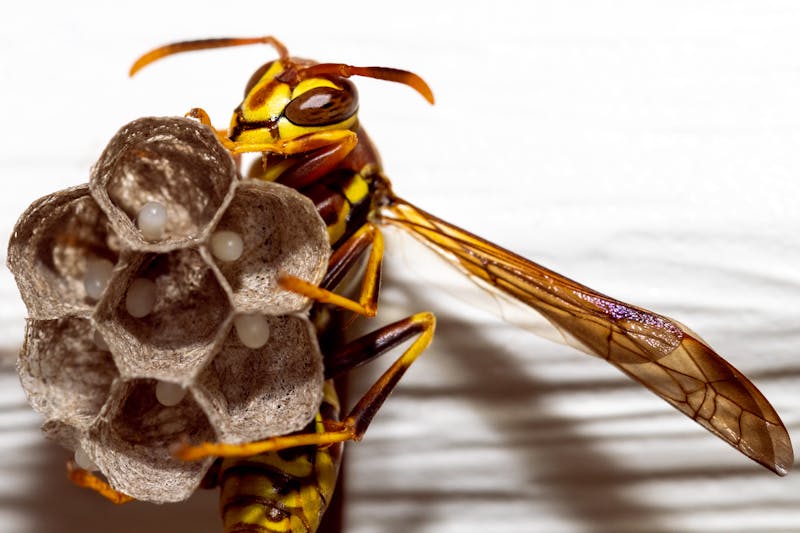
Paper wasps build small, open-celled nests that hang from eaves, door frames, deck railings, and other sheltered spots. They are not usually aggressive unless you get close to the nest. Their nests are easy to spot and typically smaller than a fist.
Yellow Jackets
Yellow jackets are the most aggressive stinging insects you are likely to encounter. They build nests underground, inside wall voids, and in other enclosed spaces. You may notice them flying in and out of a hole in the ground or a gap in your siding. Colonies can grow to thousands of workers by late summer.
Bald-Faced Hornets
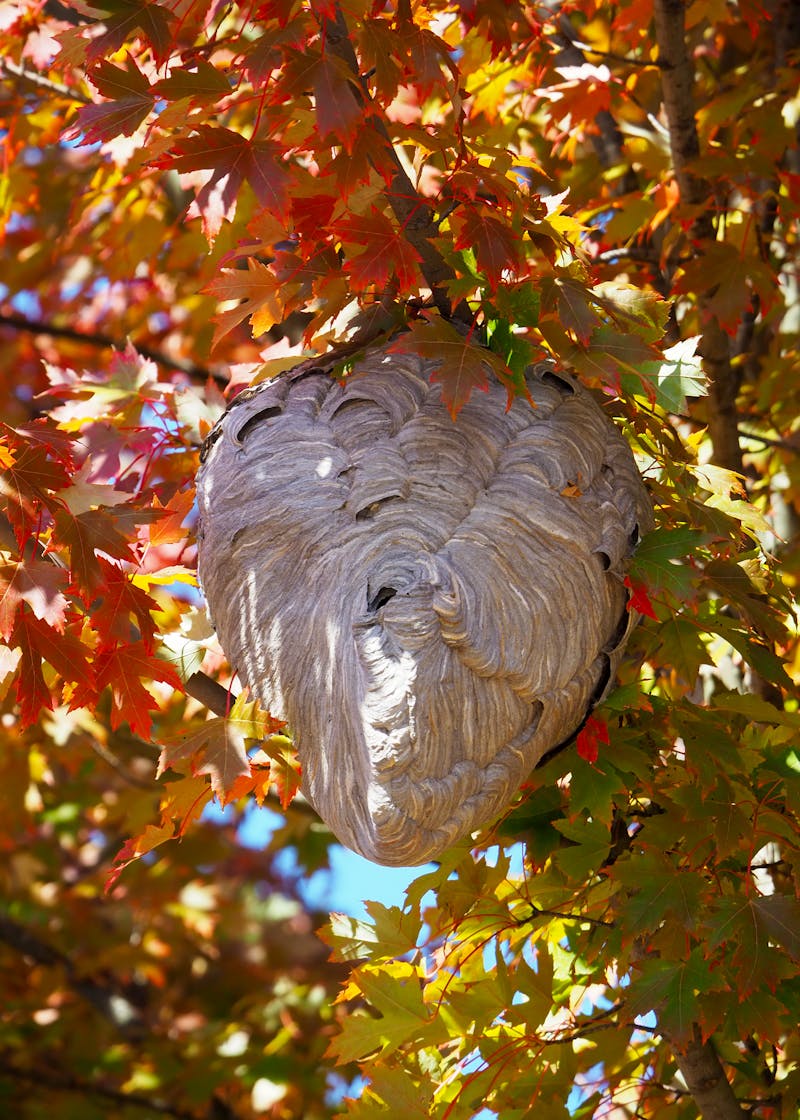
Bald-faced hornets build large, enclosed paper nests, often in trees, bushes, or under eaves. These nests can grow to the size of a football or larger. The hornets are aggressive defenders and will chase perceived threats away from the nest. Professional removal is strongly recommended.
What to Expect
The Removal Process
Identification
We determine the species and locate the nest. This informs the removal method. Yellow jacket ground nests are handled differently than a hornet nest in a tree.
Treatment & Removal
We treat the nest using methods appropriate to the species and location. The goal is full elimination of the colony with minimal disruption to your property.
Nest Removal
Once the colony is eliminated, we physically remove the nest. Leaving an old nest in place can attract other insects and is unsightly.
Prevention Advice
We point out conditions that may attract future nesting and suggest simple steps to reduce the likelihood of a return visit from wasps or hornets.
When to Call
If you are seeing a steady stream of wasps flying in and out of a specific spot, you have a nest. The sooner it is addressed, the smaller the colony and the easier (and less expensive) the removal.
Do not try to knock down or spray a large nest yourself. Bald-faced hornets and yellow jackets can swarm aggressively, and multiple stings can be dangerous, especially for people with allergies.
Send us an email with a description and photo if possible. We will let you know what you are dealing with and what it will take to resolve it.
Questions
Wasp & Hornet Removal FAQ
In many cases, yes. As long as we can access the nest area, you do not need to be home. We will send you a message when the job is done.
Wasps and hornets do not reuse old nests, but they may build a new one in the same general area if conditions are favorable. Removing the old nest and sealing gaps helps discourage them.
We recommend keeping people and pets away from the area for the rest of the day. A few stragglers may return to where the nest was. By the next morning, the area should be clear.
Yellow jackets sometimes nest inside wall cavities. We treat the colony through the entry point. In most cases, the nest does not need to be physically removed since wasp nests are dry paper (unlike honeycomb, they do not melt or attract pests). We will advise based on the specifics of your situation.
No. Wasps and hornets cannot be safely relocated the way honeybees can. They are eliminated during the removal process. Honeybees are always relocated alive whenever possible.
Dealing with Wasps or Hornets?
Do not risk getting stung. Send us a message and we will take care of it.
Contact Bee Guy