Service Detail
Live Bee Removal & Relocation in Hartford, WI
We safely extract honeybee colonies from homes and structures, then relocate them to local apiaries where they continue to pollinate and produce honey.
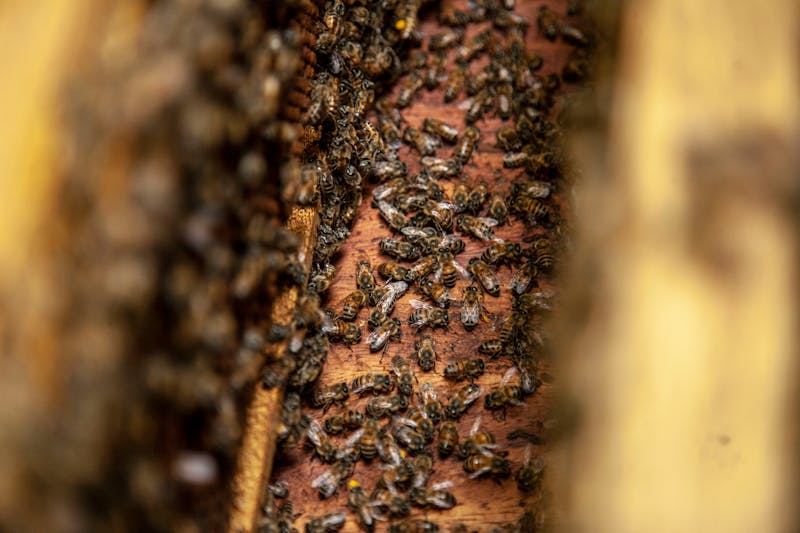
Why Live Removal Matters
Honeybees are responsible for pollinating a huge percentage of the food we eat. When a colony moves into your home, the instinct might be to call an exterminator, but killing the colony is unnecessary and wasteful. Live removal preserves the bees and solves your problem at the same time.
We locate the colony, carefully extract the bees (including the queen), remove all honeycomb, and clean the area to prevent future infestations. The bees are then transported to a local apiary where they are given a new hive and the space they need to rebuild.
This process takes longer than spraying, but the results are better. You get the bees out of your property permanently, and a healthy colony gets a second chance.
What to Expect
The Bee Removal Process
Initial Assessment
We start with your description and any photos you can provide. Based on that, we determine the likely species, the size of the colony, and what tools and approach will be needed. For colonies inside walls or structures, an on-site visit may be required before quoting.
Colony Extraction
Using specialized tools, we carefully open the structure to access the colony. The bees are vacuumed into a temporary hive box using a low-suction bee vacuum that keeps them safe. The queen is located and secured first whenever possible.
Comb Removal & Cleanup
All honeycomb is removed from the cavity. This is a critical step. Leftover comb attracts new swarms, rodents, and ants, and can cause moisture damage as it melts in the heat. We clean the area thoroughly.
Sealing & Prevention
Entry points are sealed to prevent future colonies from moving in. We advise on any additional repairs that may be needed and point out other potential entry points on the property.
Relocation
The captured colony is transported to a local apiary and introduced to a new hive. Within a few days, they settle in and resume normal activity.
Common Places Bees Move In
Honeybees are resourceful when choosing a nesting site. In the Hartford area, we commonly find colonies in:
- Wall cavities (between studs, behind siding or brick)
- Soffits and fascia boards
- Chimneys and flue openings
- Sheds, barns, and outbuildings
- Tree hollows (usually best left alone unless they pose a risk)
- Under decks and porches
If bees are entering and exiting a hole in your structure, there is almost certainly a colony growing inside. The longer it stays, the larger the comb and the more involved the removal becomes. Reaching out early saves time and money.
Questions
Bee Removal FAQ
If all comb is removed and entry points are sealed, it is unlikely. Bees are attracted to the scent of old comb, so thorough cleanup and sealing are essential parts of the process.
Simple swarm captures can be done in under an hour. Established colonies inside walls or structures typically take two to four hours, depending on accessibility and colony size.
If the colony is inside a wall, yes. There is no way to fully remove bees and comb from a wall cavity without opening it up. We work carefully to minimize damage and can advise on repair afterward.
Swarms are bees in transit looking for a new home. They are usually very docile. We capture the swarm and relocate it to a hive before it moves into a less convenient spot. If you see a swarm, reach out right away as they can move on within a day or two.
We ask that people and pets stay clear of the work area during the removal. Once the job is done, the area is safe. We will let you know when everything is clear.
Need Bees Removed?
Tell us what is going on and we will figure out the best approach together.
Contact Bee Guy